
Fillable PDF · German
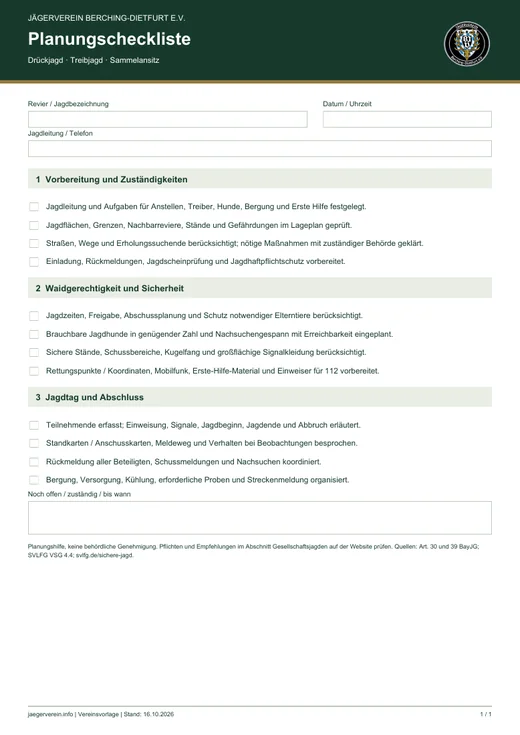
Planning checklist
Keep track of preparation, responsibilities and completion.
Download PDFManaging a hunting area in the Altmühl-Jura region requires reliable documents and easy access to information. Here you can find official forms, relevant contacts and information on hunting seasons, forest regeneration and wildlife damage.
Documents, seasons and contacts are grouped by task. Choose the relevant section in the topic overview.
Ethical hunting and animal welfare come first for us. In practice, that means honestly assessing our own abilities, hunting safely and avoiding unnecessary suffering. This includes shooting practice, responsible work with hunting dogs and tracking wounded game to avoid prolonging its suffering.
Leases, the hunting year and reporting belong together. Planning a hunting visit? See the checklist for hunting guests, including visitors from abroad.
The district's published model contract for leasing a hunting area.
For recording changes or a contract extension.
The official template provided for a hunting permit in a hunting area.
Template for recording and reporting the hunting bag. The deadline and legal basis are in the hunting-year section.
Keep lease documents, hunting permissions, contacts and planning papers together. Maintain bag records throughout the year and agree outstanding reports before the hunting year changes.
Hoofed game and other game subject to cull plans must be entered in the bag record within one week. Red deer also generally require a separate cull notification within one week. Section 16 AVBayJG sets out the details and exceptions.
Preparing, fulfilling and documenting a cull plan · Duties for the public game management review
Drawing up and submitting cull plans ↗
Section 16 AVBayJG: bag records and reporting ↗
Roe deer without a cull plan: § 15a AVBayJG ↗
Source: BAYERN.RECHT: current implementing regulation ↗
Check with the hunting authority which planning documents or notifications your hunting area requires.
Official templates: Neumarkt district forms directory ↗
Documents for hunting cooperatives: Election documents in Forms & information →
A cull plan specifies the intended harvest by species, sex and class. It connects wildlife population management with the protection of woodland and farming. Alongside the animals' physical condition, vegetation takes priority in planning, particularly forest regeneration and the forestry report.
An applicable cull plan for hoofed game must be fulfilled, involving additional hunting-licence holders if necessary. Record harvested game and relevant animals found dead in the game bag record, observing the reporting and submission deadlines.
The hunting authority may request the record at any time and require harvested animals or parts of them to be shown to the authority or its representative. This physical verification is separate from the annual public game management review. The authority may issue orders to ensure that the plan is fulfilled and enforce them where necessary.
When hunting guests visit, responsibility for fulfilling the plan remains with the area holder. Coordinate permissions and reports with the outstanding cull.
The basic rule in section 21 BJagdG names hoofed game other than wild boar, plus capercaillie, black grouse and their hybrids; it contains a separate provision for common seals. A planning requirement does not create an open season: hunting requires a lawful season and compliance with all other legal conditions. Bavarian exceptions must also be considered.
Hunting roe deer without a cull plan in Bavaria is conditional. In particular, it requires a decision by the hunting cooperative or the hunting-rights owner for a private hunting area, and timely notification to the hunting authority. In cooperative hunting areas, woodland owners must first have an opportunity to raise their concerns at the meeting; the substance of that discussion must be minuted.
In leased areas, the lease parties must carry out and document at least one joint woodland visit annually and agree how information on the roe deer cull will be provided. Landowners must be informed in good time and allowed to participate. Depending on browsing assessments, a hunting management concept and further evidence may be required. Under the statutory conditions, the authority can reinstate a cull plan. Before changing arrangements, check Article 32a BayJG ↗ and section 15a AVBayJG ↗.
The annual public review (Hegeschau) monitors cull planning and collects data. It provides information on:
Presentation duty: Area holders must generally present the antlers or horns of all hoofed game harvested or found dead in their area during the previous hunting year. The hunting authority determines the timing and presentation arrangements in agreement with the forestry authority. It may grant an individual exemption to avoid exceptional difficulties.
Recognised hunters' associations organise the review. Official regulatory powers remain with the hunting authority. See our existing Game management exhibition & assessment page for local organisation, submission and assessment; announced dates appear in the club calendar.
The BayernPortal describes an optional administrative objection procedure. Follow the instructions on legal remedies and deadlines in your decision. Under Article 32(2) BayJG, an objection or challenge in court against a cull plan for hoofed game or an order to fulfil it does not suspend its effect. Members can contact the BJV legal advice service within its existing scope.
Official overview (German): BayernPortal: cull plans – preparation, confirmation, determination and monitoring ↗ (service description dated 19 June 2026). Additional law checked on 16 October 2026: Article 32 BayJG ↗ · Section 21 BJagdG ↗ · Section 16 AVBayJG ↗ · Bavarian guidelines for hoofed game management and hunting ↗.
Ethical hunting, animal welfare and safety guide the planning. Under Article 30 of the Bavarian Hunting Act, a hunt involving more than four people is a group hunt (Gesellschaftsjagd). This can include a group high-seat hunt (Sammelansitz) without beating. A Treibjagd is a hunt with more than four beaters and people turning game back, in addition to the shooters. Drückjagd means a driven hunt.
Before starting, the leader must brief shooters and beaters and explain signals, stands, neighbours and permitted shooting sectors. Everyone directly involved must be clearly visible; large areas of high-visibility clothing are suitable.
Unless instructed otherwise, load only on the stand and unload immediately after the drive. Change stands only as directed, informing neighbours. Never endanger anyone by shooting; a sufficient backstop is essential. The leader must stop the hunt in poor visibility and exclude participants who are unfit.
Source: SVLFG hunting accident prevention rules, particularly sections 3 and 4 (German PDF) ↗. Adapt the briefing to the hunt and local conditions.
Check early whether road users or people enjoying the countryside may be affected. Discuss necessary signs, traffic controls and possible closures with the responsible road traffic authority or hunting authority. Putting up your own warning sign does not authorise a closure or replace a required official order.
Have the area, date, times, affected roads and proposed safeguards ready. The district contact options “Verkehrswesen” (traffic) and “Jagd” (hunting) ↗ help identify the responsible office. Do not assume a universal notice period or exemption from approval.
Prepare emergency arrangements: 112, exact locations, access routes and someone to guide rescuers; check mobile coverage and first-aid equipment. If danger arises, pause the hunt, inform the leader and call emergency services when necessary.
Fill in on screen or print out. The shot observation sheet has two cards per A4 page. These German-language club templates support planning; they are not official forms or approvals.
Fillable PDF · German
Keep track of preparation, responsibilities and completion.
Download PDF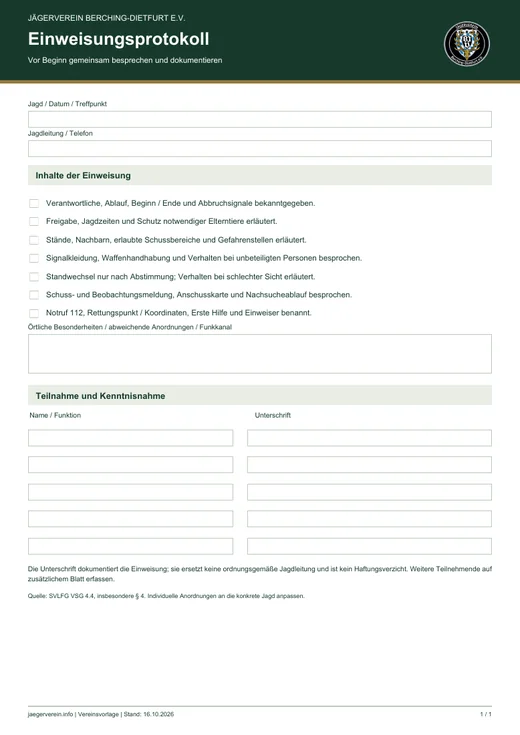
Fillable PDF · German
Record the briefing, local conditions and participants. Not a liability waiver.
Download PDF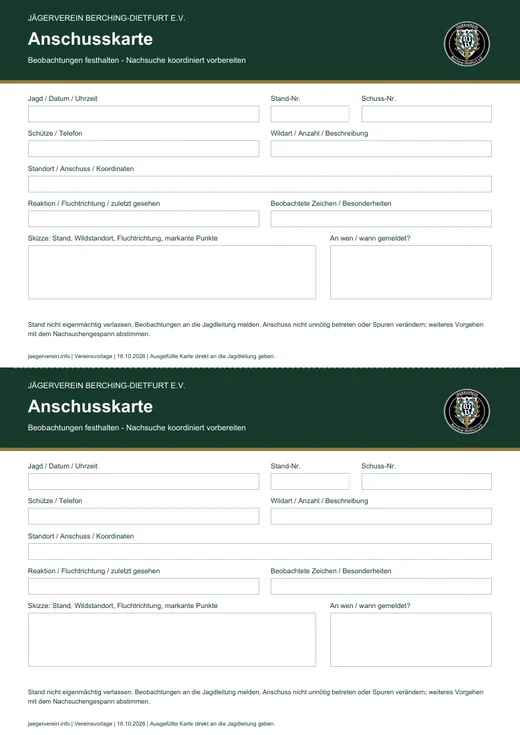
Fillable PDF · German
Record location, observations, escape direction and reporting.
Download PDFRemain on your stand: do not approach the shot site on your own during the hunt. Report observations to the leader and coordinate next steps with the tracking team.
Checked 16 October 2026: Article 30 BayJG ↗ · Article 39 BayJG ↗ · Section 16 BJagdG ↗ · Section 22 BJagdG ↗ · SVLFG: hunting safety and practical aids ↗. Check local orders and current law before the hunt.
Trapping entails responsibility for the captured animal and safety at the site. You need the right to hunt, evidence of the required knowledge and reliable arrangements for using and checking the traps.
Before getting started
You need a valid hunting licence and permission to hunt in the particular hunting ground. As a guest, expressly agree trapping with the holder of the hunting rights. Evidence of competence does not replace that permission.
Currently, evidence is generally provided through a trapping course and written confirmation of attendance. The course covers legal requirements, the design and operation of permitted traps and practical instruction. The course leader must be approved by the hunting authority. Anyone who previously opted out when applying for the hunting examination can take the course later.
Before setting a trap
Traps must ensure either capture without injury or immediate death. Specified designs and minimum dimensions apply to live traps. Other models may require approval by the hunting authority. A sales listing or a manufacturer’s statement does not replace checking Bavarian requirements.
Notify the responsible hunting authority before use. Spring traps must be permanently marked and registered, and tested before first use and every five years thereafter. Rules govern permitted designs, safe installation and screening. Set killing traps must be checked every morning.
While traps are set
Live traps must generally be checked every morning. Weasel tipping traps require checks at midday and in the evening. Wire traps for young foxes require checks every two hours during the day. These scheduled checks may be omitted with a reliable electronic alarm that reports captures immediately and is tested daily or performs a daily self test. A reported capture requires an immediate inspection of the trap.
The exception to the general prohibition on trapping devices covers wild rabbits, nutria and mammalian predators. It does not automatically permit trapping every individual species. Hunting seasons, protection of dependent young and their parents, species protection and local restrictions still apply. Areas where hunting normally rests have additional rules. Resolve uncertainties with the lower hunting authority before use.
From 2027
A new rule on evidence takes effect on 1 January 2027. Anyone who successfully passes the hunting examination in Bavaria after 1 January 2027 will also demonstrate the knowledge required for trapping. A trapping course remains an alternative. This does not automatically remove the course requirement for people who passed their examination earlier. All other requirements for traps and hunting continue to apply.
Trapping in areas where hunting normally rests → · Authority and advice →
Inviting someone to hunt in your area? Arrange three things separately: the guest's valid German hunting licence (Jagdschein), your permission to hunt in the particular area (Jagderlaubnis) and, if travelling with firearms, the required firearms travel documents.
Longer-term paid hunting permissions may be subject to additional contractual and notification rules. Check such arrangements with the lower hunting authority beforehand.
Contact the lower hunting authority at Neumarkt district office well before travelling. Provide nationality, country of residence, hunting location and travel dates, and say whether the guest will bring firearms. Confirm which authority is responsible, the documents required and the procedure for issuing the licence.
jagd@landkreis-neumarkt.de
+49 9181 / 470-1413
Nürnberger Straße 1, 92318 Neumarkt i.d.OPf., Germany
Official hunting licence application (German) ↗
The Neumarkt application specifically requires applicants for visitor and foreign-national hunting licences to ask the authority about additional documents. Finalise the invitation once the necessary paperwork is clear.
A foreign hunting licence alone does not authorise hunting in Germany. A guest without a valid German hunting licence must apply for one. Foreign nationals may qualify for a visitor hunting licence (Ausländer-Tagesjagdschein), valid for 14 consecutive days. Under the Bavarian rules, a valid foreign hunting authorisation may suffice as evidence of hunting qualification for this visitor licence. The authority also checks the other conditions for issue. Recognition of the hunting examination must be checked separately for an annual licence.
| What is needed? | What should be checked? | Where can the guest obtain it? |
|---|---|---|
| German hunting licence | Valid for the planned hunting dates; agree visitor or annual licence with the authority. | Lower hunting authority; Neumarkt application (German) ↗. |
| Identification and foreign hunting documents | Valid passport or identity card; foreign hunting authorisation, examination certificate where applicable, and any required translations. | The guest or the responsible bodies in their home country; confirm translation requirements with the German hunting authority first. |
| Hunting liability insurance certificate | Confirm cover for Germany throughout the entire period of the requested licence. | The guest's insurer; arrange suitable cover for the visit if needed. |
| Photograph and additional application documents | Neumarkt requires a photograph for a newly issued licence; ask about additional visitor and foreign-national requirements. | Photograph from the guest; definitive document checklist from the lower hunting authority. |
| Invitation and permission to hunt | For travel preparation, include the guest's name, hunting location, dates, and the host's name and contact details. Separately arrange permission to hunt in the area. | The hunting-area holder; permission template (German) ↗. |
| Documents for personal firearms | Arrange a European Firearms Pass and any German temporary firearms entry permit before travelling; see below. | Firearms pass: responsible authority in the country of residence. German permission: responsible German firearms authority. |
Travelling with a European Firearms Pass: Section 32(3) of the German Weapons Act provides an exemption from a German temporary firearms entry permit for hunting: up to three category C long guns and their corresponding ammunition permitted for hunting, provided the firearms are entered in a valid European Firearms Pass and the hunting purpose is documented, for example by an invitation. This exemption does not automatically cover every hunting firearm or accessory. A hunting licence and permission for the hunting area are also required.
Other cases, particularly without a suitable firearms pass: Check with the German firearms authority before travelling whether a temporary entry permit is required. Customs formalities must also be considered for non-EU countries. Check the rules of the country of residence, every transit country and the carrier where applicable. A hunting licence alone is not a general authorisation to bring firearms across the border.
Borrowing locally: A borrowed firearm avoids transporting your own firearm across borders. The right to acquire and temporarily possess it must still be checked before handover; sections 12(1), no. 1 and 13(4) of the German Weapons Act are particularly relevant for long guns permitted for hunting. Check the specific loan with the firearms authority and give the guest a document naming the lender and guest and stating the handover date, to carry with them (section 38 WaffG). Arrange safe transport and lawful storage at the place of stay beforehand.
District office: firearms forms (German) ↗ · Section 32: temporary entry and firearms pass ↗ · Section 33: declaration and evidence ↗
Checked on 16 October 2026. Official sources (German): Article 17 BayJG – permission to hunt ↗ · Section 15 BJagdG – hunting licence ↗ · Bavarian rules for foreign hunting examinations and visitor licences ↗ · Section 12 WaffG ↗ · Section 13 WaffG ↗ · Section 38 WaffG ↗. The responsible authority decides on each application and the evidence required.
Hunting year · April to March
Choose a month or compare seasons in the annual table. This overview has been updated using the amendment to the AVBayJG promulgated on 30 October 2026.
Binding source: GVBl. 2026 p. 621 ↗ · effective 31 October 2026 · reviewed 30 October 2026
An open season alone does not grant permission to hunt. Other legal requirements, protection of parent animals needed to rear their young and local orders still apply. Special provisions appear below the table. Adult animals are fully grown; juveniles are young animals.
Click a month on the timeline to open its hunting seasons. Click again to close it. On a phone, swipe the timeline sideways.
Hunting seasons in
Partial months show their start or end day.
 Roe deer – yearling femalesfrom 16Roe deer – bucksfrom 16
 Wild boarwhole month
 Wild rabbitswhole month
 Foxeswhole month
 Badgers (juveniles)from 16
 Raccoons, raccoon dogs, coypu (nutria), minkwhole month
 Wild turkeys (males)whole month
 Egyptian geesewhole month
 Ruddy shelducks (juveniles)whole month
Woodpigeons: additional hunting only to prevent damage, in flocks of at least three on the land specified in note 1. Juveniles only. Read note 1
Hunting seasons in
Partial months show their start or end day.
 Red deer – yearling females and yearling spike maleswhole monthRoe deer – yearling femaleswhole monthRoe deer – buckswhole monthWild boarwhole monthWild rabbitswhole monthFoxeswhole monthBadgers (juveniles)whole monthRaccoons, raccoon dogs, coypu (nutria), minkwhole monthWild turkeys (males)until 15Egyptian geesewhole monthRuddy shelducks (juveniles)whole month
Woodpigeons: additional hunting only to prevent damage, in flocks of at least three on the land specified in note 1. Juveniles only. Read note 1
Hunting seasons in
Partial months show their start or end day.
Red deer – yearling females and yearling spike maleswhole monthRoe deer – yearling femaleswhole monthRoe deer – buckswhole monthWild boarwhole monthWild rabbitswhole monthFoxeswhole month Stone martens (juveniles)whole monthBadgers (juveniles)whole monthRaccoons, raccoon dogs, coypu (nutria), minkwhole monthEgyptian geesewhole monthRuddy shelducks (juveniles)whole month
Woodpigeons: additional hunting only to prevent damage, in flocks of at least three on the land specified in note 1. Juveniles only. Read note 1
Hunting seasons in
Partial months show their start or end day.
Red deer – calves and adult femalesfrom 16Red deer – yearling females and yearling spike maleswhole month Fallow and sika deer – yearling females and yearling spike maleswhole monthRoe deer – yearling femaleswhole monthRoe deer – buckswhole monthWild boarwhole monthWild rabbitswhole monthFoxeswhole monthStone martens (juveniles)whole monthBadgers (juveniles)whole monthRaccoons, raccoon dogs, coypu (nutria), minkwhole month
Woodpigeons: additional hunting only to prevent damage, in flocks of at least three on the land specified in note 1. Juveniles only. Read note 1
Hunting seasons in
Partial months show their start or end day.
Red deer – calves and adult femaleswhole monthRed deer – yearling females and yearling spike maleswhole monthRed deer – all other maleswhole monthFallow and sika deer – yearling females and yearling spike maleswhole monthRoe deer – yearling femaleswhole monthRoe deer – buckswhole month Chamoiswhole monthWild boarwhole month
 Mouflonwhole monthWild rabbitswhole monthFoxeswhole monthStone martens (adults)whole monthStone martens (juveniles)whole month
 Polecats, stoats, least weaselswhole monthBadgers (adults)whole monthBadgers (juveniles)whole monthRaccoons, raccoon dogs, coypu (nutria), minkwhole month
Woodpigeons: additional hunting only to prevent damage, in flocks of at least three on the land specified in note 1. Juveniles throughout the month; adults from 20 August. Read note 1
Hunting seasons in
Partial months show their start or end day.
Red deer – calves and adult femaleswhole monthRed deer – yearling females and yearling spike maleswhole monthRed deer – all other maleswhole monthFallow and sika deer – calves and adult femaleswhole monthFallow and sika deer – yearling females and yearling spike maleswhole monthFallow and sika deer – all other maleswhole monthRoe deer – adult females and kidswhole monthRoe deer – yearling femaleswhole monthRoe deer – buckswhole monthChamoiswhole monthWild boarwhole monthMouflonwhole monthWild rabbitswhole monthFoxeswhole monthStone martens (adults)whole monthStone martens (juveniles)whole monthPolecats, stoats, least weaselswhole monthBadgers (adults)whole monthBadgers (juveniles)whole monthRaccoons, raccoon dogs, coypu (nutria), minkwhole month Grey partridgeswhole month
 Greylag and Canada geese2whole monthEgyptian geesewhole monthRuddy shelducks (adults)whole monthRuddy shelducks (juveniles)whole month
 Mallardswhole month
 Cootsfrom 11
 Jays, magpies, carrion and hooded crowswhole month
 Grey herons3from 16
Woodpigeons: additional hunting only to prevent damage, in flocks of at least three on the land specified in note 1. Adults and juveniles. Read note 1
Hunting seasons in
Partial months show their start or end day.
Red deer – calves and adult femaleswhole monthRed deer – yearling females and yearling spike maleswhole monthRed deer – all other maleswhole monthFallow and sika deer – calves and adult femaleswhole monthFallow and sika deer – yearling females and yearling spike maleswhole monthFallow and sika deer – all other maleswhole monthRoe deer – adult females and kidswhole monthRoe deer – yearling femaleswhole monthRoe deer – bucksuntil 15Chamoiswhole monthWild boarwhole monthMouflonwhole month Brown haresfrom 16Wild rabbitswhole monthFoxeswhole monthStone martens (adults)whole monthStone martens (juveniles)whole month
 Pine martensfrom 16Polecats, stoats, least weaselswhole monthBadgers (adults)whole monthBadgers (juveniles)whole monthRaccoons, raccoon dogs, coypu (nutria), minkwhole monthGrey partridgeswhole month
 Pheasantswhole monthWild turkeys (males)whole monthWild turkeys (females)whole monthGreylag and Canada geese2whole monthEgyptian geesewhole monthRuddy shelducks (adults)whole monthRuddy shelducks (juveniles)whole monthMallardswhole monthWigeon, teal, pintail, scaup, tufted duck, pochard, velvet and common scoterwhole month
 Woodcockfrom 16Cootswhole month
 Black-headed, common, herring, great black-backed and lesser black-backed gullswhole monthJays, magpies, carrion and hooded crowswhole monthGrey herons3whole month
Woodpigeons: additional hunting only to prevent damage, in flocks of at least three on the land specified in note 1. Adults and juveniles. Read note 1
Hunting seasons in
Partial months show their start or end day.
Red deer – calves and adult femaleswhole monthRed deer – yearling females and yearling spike maleswhole monthRed deer – all other maleswhole monthFallow and sika deer – calves and adult femaleswhole monthFallow and sika deer – yearling females and yearling spike maleswhole monthFallow and sika deer – all other maleswhole monthRoe deer – adult females and kidswhole monthRoe deer – yearling femaleswhole monthChamoiswhole monthWild boarwhole monthMouflonwhole monthBrown hareswhole monthWild rabbitswhole monthFoxeswhole monthStone martens (adults)whole monthStone martens (juveniles)whole monthPine martenswhole monthPolecats, stoats, least weaselswhole monthBadgers (adults)whole monthBadgers (juveniles)whole monthRaccoons, raccoon dogs, coypu (nutria), minkwhole monthPheasantswhole monthWild turkeys (males)whole monthWild turkeys (females)whole month Woodpigeons and collared doves1whole month
 Mute swanswhole monthGreylag and Canada geese2whole monthEgyptian geesewhole monthRuddy shelducks (adults)whole monthRuddy shelducks (juveniles)whole monthWhite-fronted, bean and brent geesewhole monthMallardswhole monthWigeon, teal, pintail, scaup, tufted duck, pochard, velvet and common scoterwhole monthWoodcockwhole monthCootswhole monthBlack-headed, common, herring, great black-backed and lesser black-backed gullswhole monthJays, magpies, carrion and hooded crowswhole month
Hunting seasons in
Partial months show their start or end day.
Red deer – calves and adult femaleswhole monthRed deer – yearling females and yearling spike maleswhole monthRed deer – all other maleswhole monthFallow and sika deer – calves and adult femaleswhole monthFallow and sika deer – yearling females and yearling spike maleswhole monthFallow and sika deer – all other maleswhole monthRoe deer – adult females and kidswhole monthRoe deer – yearling femaleswhole monthChamoisuntil 15Wild boarwhole monthMouflonwhole monthBrown hareswhole monthWild rabbitswhole monthFoxeswhole monthStone martens (adults)whole monthStone martens (juveniles)whole monthPine martenswhole monthPolecats, stoats, least weaselswhole monthBadgers (adults)whole monthBadgers (juveniles)whole monthRaccoons, raccoon dogs, coypu (nutria), minkwhole monthPheasantswhole monthWild turkeys (males)whole monthWild turkeys (females)whole monthWoodpigeons and collared doves1whole monthMute swanswhole monthGreylag and Canada geese2whole monthEgyptian geesewhole monthRuddy shelducks (adults)whole monthRuddy shelducks (juveniles)whole monthWhite-fronted, bean and brent geesewhole monthMallardswhole monthWigeon, teal, pintail, scaup, tufted duck, pochard, velvet and common scoterwhole monthWoodcockwhole monthCootswhole monthBlack-headed, common, herring, great black-backed and lesser black-backed gullswhole monthJays, magpies, carrion and hooded crowswhole monthHunting seasons in
Partial months show their start or end day.
Red deer – calves and adult femalesuntil 15Red deer – yearling females and yearling spike malesuntil 15Red deer – all other malesuntil 15Fallow and sika deer – calves and adult femaleswhole monthFallow and sika deer – yearling females and yearling spike maleswhole monthFallow and sika deer – all other maleswhole monthRoe deer – adult females and kidsuntil 15Roe deer – yearling femalesuntil 15Wild boarwhole monthMouflonwhole monthWild rabbitswhole monthFoxeswhole monthStone martens (adults)whole monthStone martens (juveniles)whole monthPine martenswhole monthPolecats, stoats, least weaselswhole monthBadgers (adults)whole monthBadgers (juveniles)whole monthRaccoons, raccoon dogs, coypu (nutria), minkwhole monthWild turkeys (males)until 15Wild turkeys (females)until 15Woodpigeons and collared doves1whole monthMute swanswhole monthGreylag and Canada geese2whole monthEgyptian geesewhole monthRuddy shelducks (adults)whole monthRuddy shelducks (juveniles)whole monthWhite-fronted, bean and brent geeseuntil 15Mallardsuntil 15Wigeon, teal, pintail, scaup, tufted duck, pochard, velvet and common scoteruntil 15Woodcockuntil 15Cootswhole monthBlack-headed, common, herring, great black-backed and lesser black-backed gullswhole monthJays, magpies, carrion and hooded crowswhole monthHunting seasons in
Partial months show their start or end day.
Wild boarwhole monthWild rabbitswhole monthFoxeswhole monthStone martens (adults)until 28Stone martens (juveniles)until 28Pine martensuntil 28Polecats, stoats, least weaselsuntil 28Raccoons, raccoon dogs, coypu (nutria), minkwhole monthWoodpigeons and collared doves1until 20Mute swansuntil 20Greylag and Canada geese2until 28Egyptian geesewhole monthRuddy shelducks (adults)until 28Ruddy shelducks (juveniles)whole monthCootsuntil 20Black-headed, common, herring, great black-backed and lesser black-backed gullsuntil 10Jays, magpies, carrion and hooded crowswhole monthWoodpigeons: additional hunting only to prevent damage, in flocks of at least three on the land specified in note 1. Adults and juveniles from 21 February. Read note 1
Hunting seasons in
Partial months show their start or end day.
Wild boarwhole monthWild rabbitswhole monthFoxeswhole monthRaccoons, raccoon dogs, coypu (nutria), minkwhole monthWild turkeys (males)from 15Egyptian geesewhole monthRuddy shelducks (juveniles)whole monthJays, magpies, carrion and hooded crowsuntil 14Woodpigeons: additional hunting only to prevent damage, in flocks of at least three on the land specified in note 1. Adults and juveniles until 31 March. Read note 1
April to March: coloured cells show open seasons; numbers show the first or last day of a partial month. Exact dates appear in the right-hand column. On small screens, scroll the table sideways.
| Species / age class | Apr. | May. | Jun. | Jul. | Aug. | Sep. | Oct. | Nov. | Dec. | Jan. | Feb. | Mar. | Open season |
|---|---|---|---|---|---|---|---|---|---|---|---|---|---|
| Red deer – calves and adult females | 16 Jul – 15 Jan | ||||||||||||
| Red deer – yearling females and yearling spike males | 1 May – 15 Jan | ||||||||||||
| Red deer – all other males | 1 Aug – 15 Jan | ||||||||||||
| Fallow and sika deer – calves and adult females | 1 Sep – 31 Jan | ||||||||||||
| Fallow and sika deer – yearling females and yearling spike males | 1 Jul – 31 Jan | ||||||||||||
| Fallow and sika deer – all other males | 1 Sep – 31 Jan | ||||||||||||
| Roe deer – adult females and kids | 1 Sep – 15 Jan | ||||||||||||
| Roe deer – yearling females | 16 Apr – 15 Jan | ||||||||||||
| Roe deer – bucks | 16 Apr – 15 Oct | ||||||||||||
| Chamois | 1 Aug – 15 Dec | ||||||||||||
| Wild boar | all year | ||||||||||||
| Mouflon | 1 Aug – 31 Jan |
| Species / age class | Apr. | May. | Jun. | Jul. | Aug. | Sep. | Oct. | Nov. | Dec. | Jan. | Feb. | Mar. | Open season |
|---|---|---|---|---|---|---|---|---|---|---|---|---|---|
| Brown hares | 16 Oct – 31 Dec | ||||||||||||
| Wild rabbits | all year | ||||||||||||
| Foxes | all year | ||||||||||||
| Stone martens (adults) | 1 Aug – 28 Feb | ||||||||||||
| Stone martens (juveniles) | 1 Jun – 28 Feb | ||||||||||||
| Pine martens | 16 Oct – 28 Feb | ||||||||||||
| Polecats, stoats, least weasels | 1 Aug – 28 Feb | ||||||||||||
| Badgers (adults) | 1 Aug – 31 Jan | ||||||||||||
| Badgers (juveniles) | 16 Apr – 31 Jan | ||||||||||||
| Raccoons, raccoon dogs, coypu (nutria), mink | all year |
| Species / age class | Apr. | May. | Jun. | Jul. | Aug. | Sep. | Oct. | Nov. | Dec. | Jan. | Feb. | Mar. | Open season |
|---|---|---|---|---|---|---|---|---|---|---|---|---|---|
| Grey partridges | 1 Sep – 31 Oct | ||||||||||||
| Pheasants | 1 Oct – 31 Dec | ||||||||||||
| Wild turkeys (males) | 15 Mar – 15 May and 1 Oct – 15 Jan | ||||||||||||
| Wild turkeys (females) | 1 Oct – 15 Jan | ||||||||||||
| Woodpigeons and collared doves1 | 1 Nov – 20 Feb | ||||||||||||
| Mute swans | 1 Nov – 20 Feb | ||||||||||||
| Greylag and Canada geese2 | 1 Aug – 28 Feb | ||||||||||||
| Egyptian geese | all year | ||||||||||||
| Ruddy shelducks (adults) | 1 Sep – 28 Feb | ||||||||||||
| Ruddy shelducks (juveniles) | all year | ||||||||||||
| White-fronted, bean and brent geese | 1 Nov – 15 Jan | ||||||||||||
| Mallards | 1 Sep – 15 Jan | ||||||||||||
| Wigeon, teal, pintail, scaup, tufted duck, pochard, velvet and common scoter | 1 Oct – 15 Jan | ||||||||||||
| Woodcock | 16 Oct – 15 Jan | ||||||||||||
| Coots | 11 Sep – 20 Feb | ||||||||||||
| Black-headed, common, herring, great black-backed and lesser black-backed gulls | 1 Oct – 10 Feb | ||||||||||||
| Jays, magpies, carrion and hooded crows | 16 Jul – 14 Mar | ||||||||||||
| Grey herons3 | 16 Sep – 31 Oct |
For other species subject to specific exceptions, and for local deviations, consult the applicable law.
The AELF Amberg-Neumarkt publishes forestry reports on forest regeneration. They describe how browsing and fraying damage affect young trees. Together with assessments for individual hunting areas, they help inform discussions about the state of the woodland and local hunting plans.
The AELF website has the 2024 reports for our three local hunting groups: 340 Berching, 341 Staufersbuch and 342 Dietfurt. Woodland visits with landowners and forestry professionals connect these data with observations of actual regeneration.
Record the nature of the damage and the affected area, and check the contractual arrangements. Speak to those involved early. The BJV explains liability, types of damage and timely reporting.
Source: BJV: Advice on wildlife damage ↗ October 2026
In Bavaria, the preliminary procedure generally goes through the municipality responsible for the property. Check the current reporting deadlines as soon as you become aware of damage; discussing it between yourselves does not replace the required notification.
Emergency arrangements, help for injured people and veterinary contacts now have their own page.
For official enquiries about hunting law, hunting area documents and notifications, the district administration office lists the following contacts:
When making an enquiry, give the hunting area, municipality and specific matter. For an appointment in person, use the district office’s current contact details.
Source: District office: Mr Berner ↗
Source: District Office: Mr Hollweck ↗
Helmut Pöller and Herbert Eichenseer serve as district hunting advisers for specialist hunting matters.
District hunting advisers support the lower hunting authority in an honorary capacity, contributing expertise in hunting practice and hunting management. They are consulted on these matters, advise the authority and attend meetings of the hunting advisory board.
Official decisions and the processing of applications are the responsibility of the hunting authority. To make contact and have your enquiry directed appropriately, use the official contact point for Landkreis Neumarkt.
The BJV offers its members brief initial legal advice on hunting and firearms law. Send a short summary of your enquiry to recht@jagd-bayern.de and provide a telephone number for a return call. Further legal support is arranged separately; current terms and consultation hours are listed on the association’s website.
BJV: Hunting law and initial legal advice ↗
Source: BJV: Hunting law ↗ October 2026
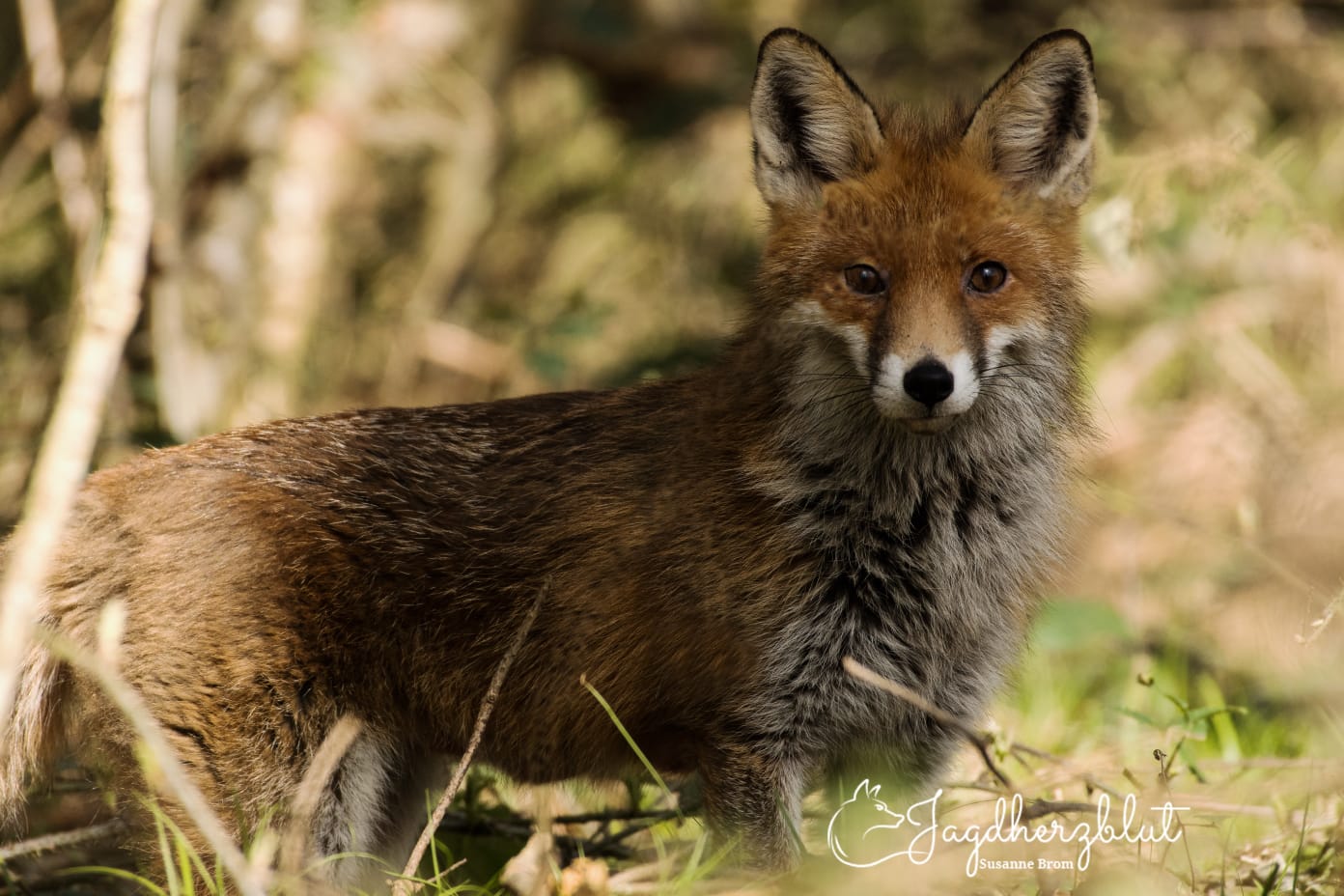
Practical wildlife management involves keeping a watchful eye on wildlife and its habitat. Sharing observations from individual hunting areas brings people together in the local hunting group.